


How we helped a pre product-market-fit SaaS startup find which audiences and messages actually convert
The client is under NDA, so the company name, the audiences we tested, and all budget figures are left out. The totals come straight from the live ad account.
Executive Summary
A founder came to us with a new AI agent platform for small businesses and teams. The product worked. What nobody knew yet was who it was really for. It could help many kinds of teams with many kinds of tasks, and that was exactly the problem: there was no product-market fit yet, no settled positioning, and no data to choose between ten good-sounding ideas.
So instead of a standard launch campaign, we ran the project as a structured search for product-market fit. In the first days we built the ideal customer profiles and jobs to be done from scratch, studied competitors, and checked what people actually search for. The week after the founder signed off on that research, the first hypotheses were live on Google Ads and Meta. LinkedIn came later, once those two channels had confirmed which profiles and jobs were real. Every week we sat down with the founder, showed what the data said, and agreed on the next landing page and the next ad.
Over about three and a half months the program brought in more than 3,000 leads across all channels, from roughly 40 message tests. Just as important, the founder ended up with evidence, from real sign-ups rather than opinions, about which audiences responded, which messages to lead with, and which ideas to drop.
About the Client
The client is an early-stage B2B SaaS company with an AI agent platform. Teams use it to build agents that handle multi-step work, with a person approving anything important before the agent acts. It is sold on monthly self-serve plans, with an enterprise tier for larger companies. When we started, the product had no paid acquisition history at all, and we were the only marketing consultants on the project.
The Real Problem: No Product-Market Fit Yet
Most SaaS case studies start with a channel that is underperforming. This one started earlier. Three things were still open:
Who is it for? An AI agent platform can, in theory, serve a dozen roles in companies of any size. Speaking to all of them at once produces ads that say nothing to anyone.
What do we say? Like most startups, the company needed a message fast, without months of research and with nothing but internal opinions to go on.
What counts as success? A registration was not enough. The real signal was a person who signed up and then started using the platform, which meant measuring events inside the product, not just on the website.
Why This Was Not a Typical Agency Engagement
A normal agency brief looks like this: a fixed channel plan, a budget, a launch date, and a monthly report. That works when you already know your buyer. It fails before product-market fit, because the plan is built on guesses and the report arrives too late to change them.
The founder needed something different: a team that understood the product was still searching, could generate ideas quickly, launch them cheaply, read the results honestly, and come back a week later with the next round. We set up the work around that goal from the first conversation. Our job was not to defend a media plan. It was to help the founder find the version of the product story that the market would actually buy.
How We Worked
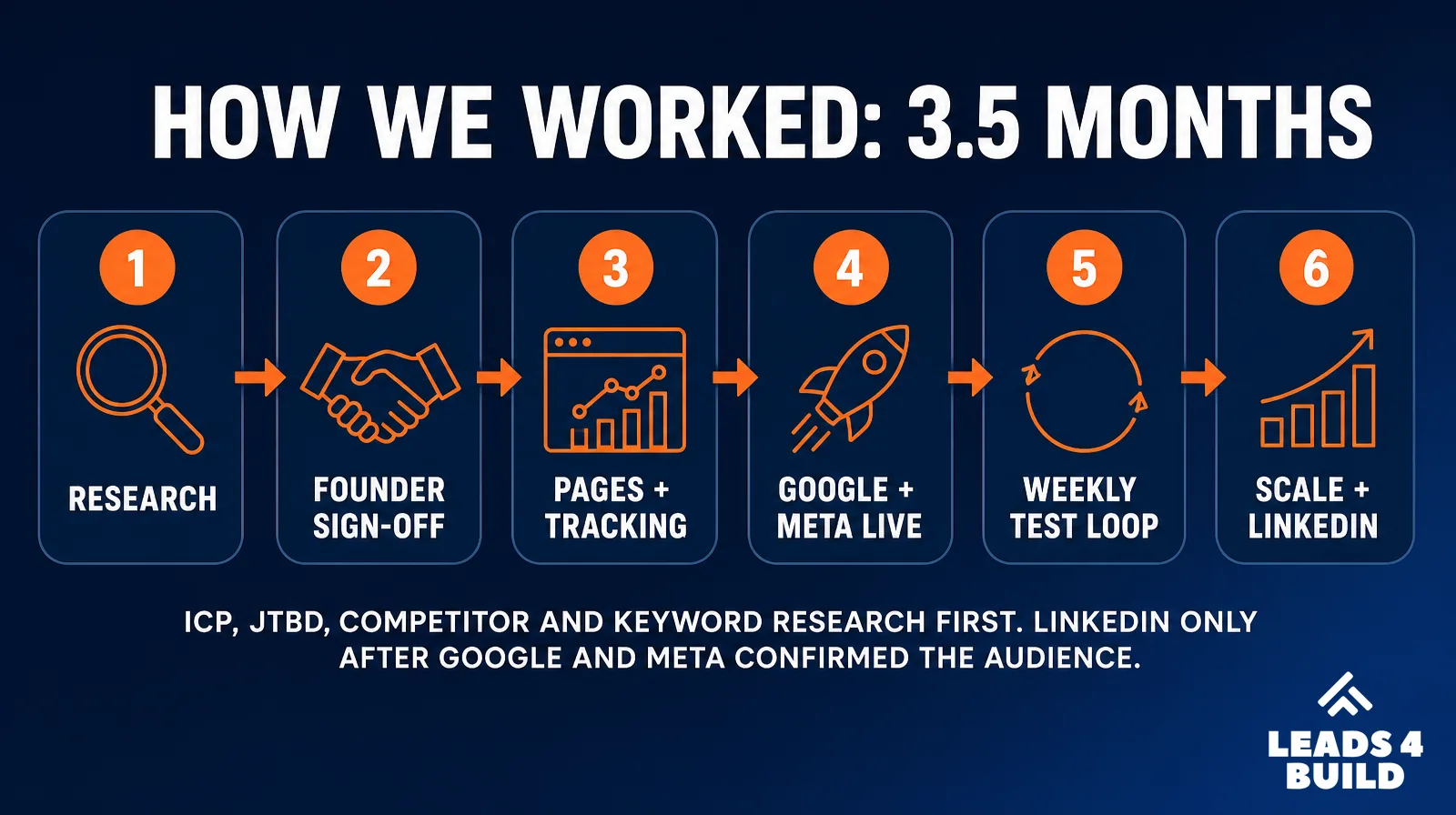
1. Research in days, not months
There was no customer data to start from, so we built it ourselves, fast. We defined the ideal customer profiles: the role of the person, the type of company they work in, and the company size. For each profile we listed the jobs to be done, the day-to-day tasks they would plausibly hand to an AI agent. Alongside that we analyzed competitors and how they position themselves, and used keyword research tools to see what people were actually searching for. The result was a list of concrete people with concrete problems, instead of a vague “teams that want AI,” ready in days rather than weeks.
2. Founder sign-off and the hypothesis board
We turned that research into audience hypotheses and walked the founder through every one, so each test reflected what the product could really deliver. Once the founder signed off, the first hypotheses went live the following week. Everything went into one hypothesis board: the profile, the problem, the message, the channel, the landing page, the launch date, and the metric that would confirm or kill the idea. The board became the plan, the timeline, and the record of what we learned.
3. Landing pages and tracking, built in parallel
We worked on both at the same time to get real data as early as possible. For pages, we gave the client’s content team templates and written copy, so each hypothesis got its own landing page instead of sending every visitor to the homepage. For tracking, we wrote a technical specification for the developers: which events to fire inside the platform after sign-up, with one naming convention for all of them. That let the founder’s team see in their own data which campaigns brought people who signed up and kept going, not just people who registered.
4. Channels in the right order
We started where intent and volume come fastest: Google Ads and Meta, with retargeting for visitors who did not sign up the first time, and Reddit as an additional test channel. LinkedIn, the most expensive channel per click, came in only after Google and Meta had confirmed which profiles and jobs to be done were real, so its budget went to audiences we already knew would respond. Each test had a small budget, a clear success metric, and a decision at the end: scale it, rework the message, or stop it. Over the project we ran about 40 of these message tests.
5. The weekly loop with the founder
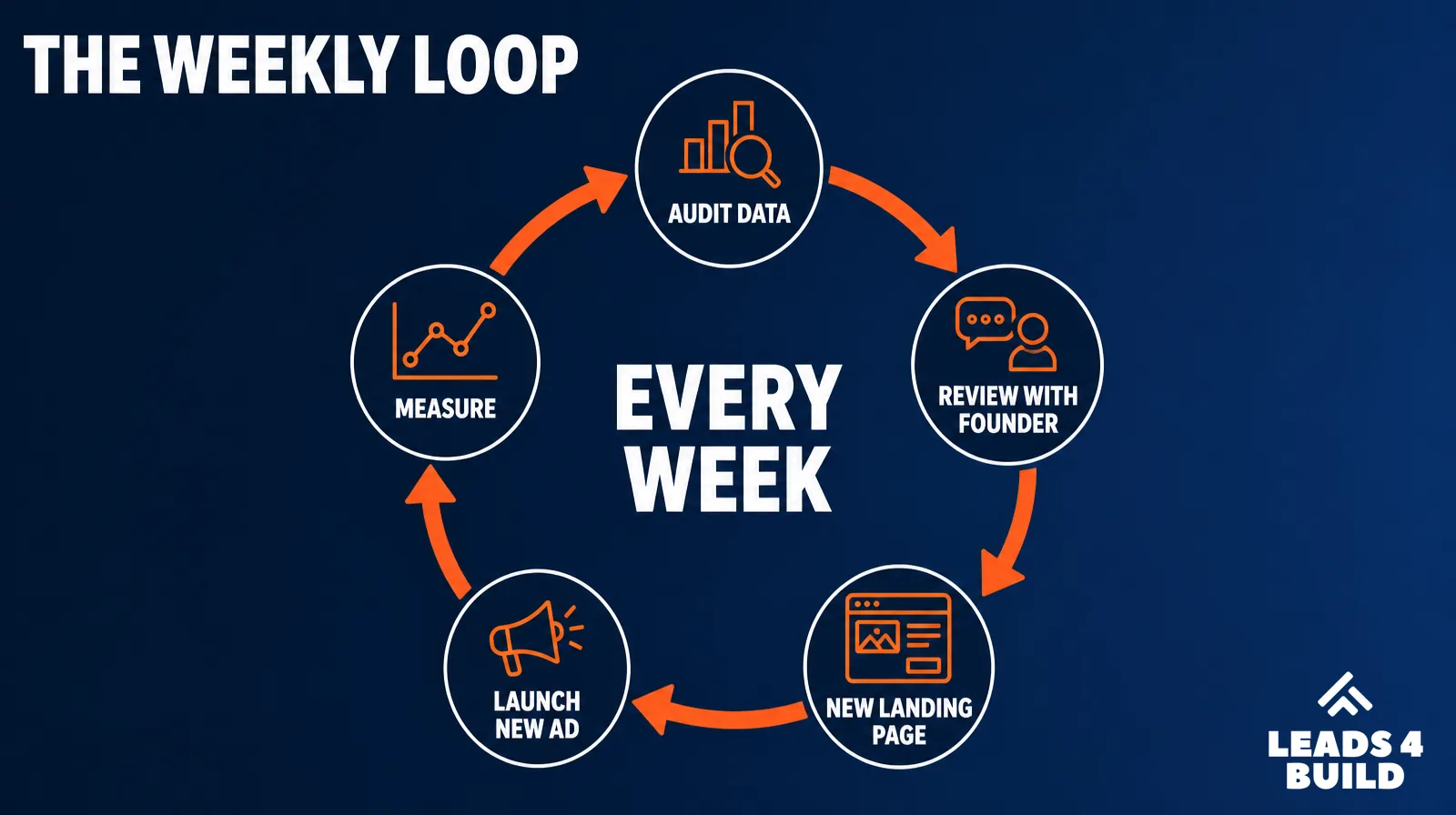
This is the part that made the difference. Every week we audited the accounts and the in-product events, then met with the founder. The conversation was always practical: here is what we see, this message is working at this price, this one is not, so let’s build one more landing page and launch a new ad around the idea that is pulling. Nothing was launched and left alone. Ideas that worked got more budget the next week. Ideas that did not were stopped, and the learning went straight into the next hypothesis.
Results
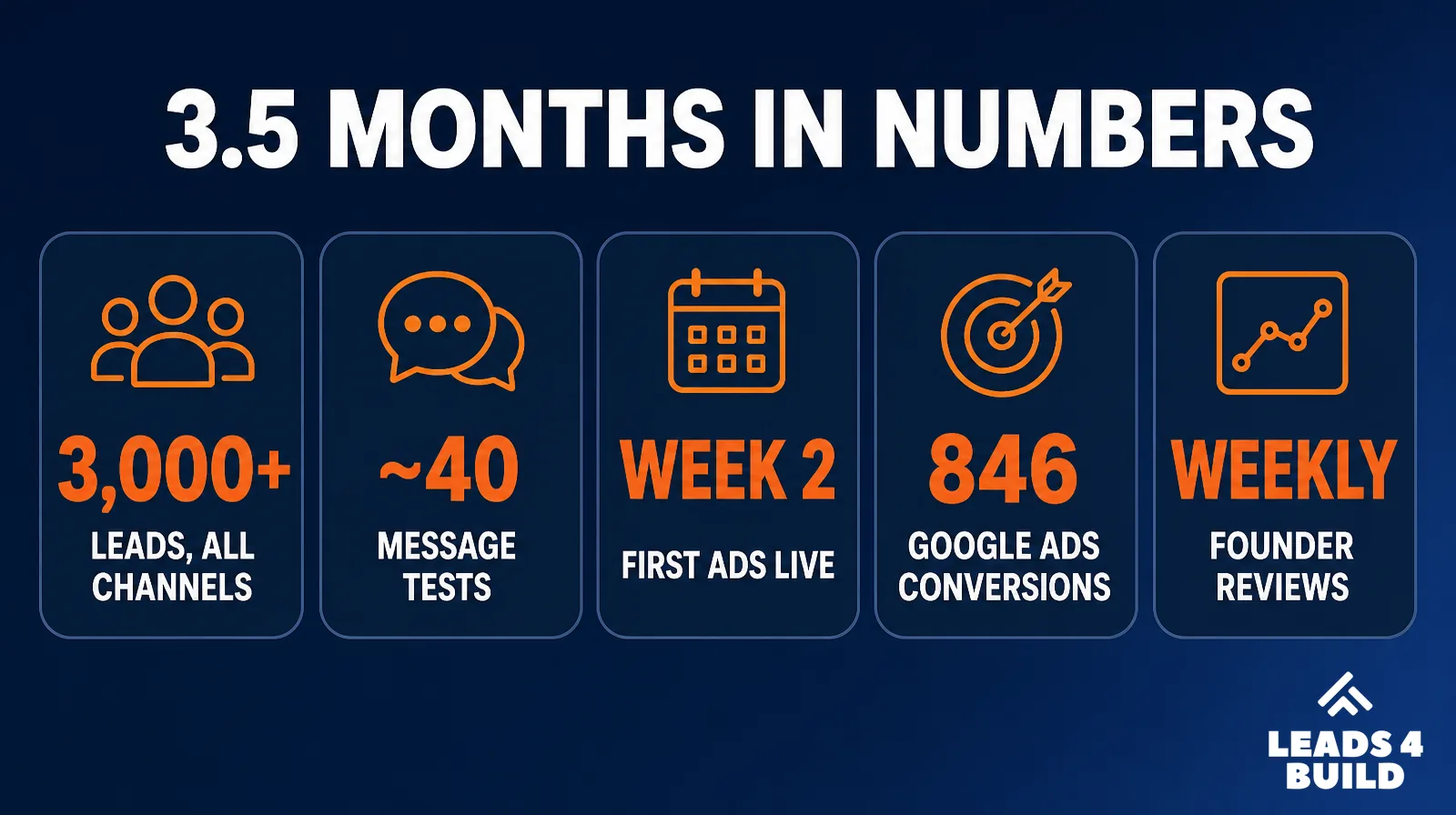
In about three and a half months the program brought in more than 3,000 leads across all channels. Google Ads alone accounted for 846 tracked conversions from more than 13,700 clicks, about 6 conversions per 100 clicks, with Meta, LinkedIn, and Reddit adding the rest on the same tracking. In-product activation was measured on the client’s side with the events we specified, and that data stays with the client.
The numbers matter less than what they gave the founder:
- A shortlist of audiences that respond, and a clear list of ones that did not, including some everyone expected to work.
- Messages that convert, with a known cost, instead of a positioning debate based on taste.
- Tracking that connects ads to real product usage, ready for scaling.
- A repeatable way to test the next idea in a week instead of a quarter.
- A LinkedIn budget spent only on proven audiences, because the cheaper channels answered the “who” question first.
Who This Approach Is For
This way of working fits a specific kind of company:
- Startups that have a working product but have not settled on positioning yet.
- Companies with several products or use cases that are not sure which one has product-market fit.
- AI and agent platforms, where the technology can serve almost anyone and the hard part is choosing who to serve first.
- Teams entering a new market or segment who need evidence before committing a big budget.
Lessons for SaaS Founders
Write the hypotheses down before you spend. A shared board with profile, problem, message, and success metric turns ad spend into answers. Without it, a launch produces a dashboard and no decisions.
Validate on cheaper channels first. Google and Meta answered the “who” and “what” questions before any LinkedIn budget was spent.
Define the people, not just the tasks. A job to be done only becomes testable once you know who has it, in what kind of company, and at what size.
Fix tracking before you scale. Ads judged on sign-ups alone can find people who never use the product. Send in-product events back so campaigns are judged on real usage.
Meet weekly, decide weekly. Before product-market fit, a monthly report is too slow. A short weekly review with the founder kept every test moving.
Stop losing tests quickly. Many ideas produced little or nothing. Stopping them fast is what paid for scaling the few that worked.
Looking for Product-Market Fit?
We bring the same process to every SaaS marketing engagement: customer profiles and hypotheses first, tracking second, then fast, measured tests and a weekly review with you. If your product is still looking for its market, or you have several products and need to know which one to push, book a free strategy session below.